
O LORD, HOW MANIFOLD ARE THY WORKS! in wisdom hast thou made them all: the earth is full of thy riches. – Psalm 104:24
If you are a Christian who is desirous of profiting from the profound insights that can be provided by your spiritual side, you are well advised to shut down the hustle and bustle of your everyday struggle and allow yourself to ponder on nature and its staggering beauty and breathtaking import.
In Antarctica for example, there are incredible and complex ice formations known as glaciers. These are slow moving rivers of ice formed at very high altitudes where the temperature is cold enough for them to eventually freeze. Prominent among these is the Eqi glacier of Greenland which is one of the most active in the world. Today, however, glacial formations around the world are fast receding due to global warming, shedding as they go, over 160 billion tonnes of ice annually. How grandiose! There are no humans that permanently live in Antarctica but it is home to a varied array of specialized plant and animal species that have evolved the capacity to withstand the punishing cold. These include penguins, seals mites, algae and lichens.
OUT OF WHOSE WOMB CAME THE ICE? AND THE HOARY FROST OF HEAVEN, WHO HATH GENDERED IT? The waters are hid as with a stone, and the face of the deep is frozen. – Job 38:29 -30
Then there are the spectacular Himalayan Mountains that traverse five independent countries: Bhutan, Pakistan, China, India and Nepal. It is the longest stretch of mountains in the world including many of the highest with Mount Everest as the most notable. The Himalayas is home to some of the rarest and most varied flora and fauna on the planet earth not to talk of some of the world’s major rivers like the River Ganges and River Indus that rise from them. Fifty three million people reside in the Himalayas representing four discernably distinct cultural groups. They are Hindu, Buddhist, Islamic and Animist. From a human geography standpoint, it is very interesting how they each occupy specific regions of the landscape that appear directly linked to specific altitudes within the mountains.
THE RANGE OF THE MOUNTAINS IS HIS PASTURE, and he searcheth after every green thing. – Job 39:8
The world’s desert regions provide yet another unique geographical marvel on the earth’s surface. The most popular and the largest subtropical desert is known as the Sahara. It is regarded as a hyper-arid desert and its breathtaking beauty lies is in its rocky stone plateaus, salt flats, gravel plains, Wadis and its huge tourist attracting sand dunes which can reach up to 180 meters high. In some spots, the Sahara records the hottest temperatures on Earth during summer. This is due to the high position of the Sun, and the lack of vegetation and rainfall coupled with low humidity. Despite what we may consider inhospitable terrain, life does exist in the Sahara desert. There are several species of desert foxes, monitor lizards, dromedary camels and red necked ostrich which have all adapted to the hostile terrain and hot climate. The peoples of the Sahara are pastoralists albeit nomadic as they have to keep moving to areas where there is pasture. As one can imagine, this occurs mainly on the fringes of the arid desert and in the borders of the mountains. They are mostly Berbers and Touaregs who speak Arabic following the spread of Islam in that region.
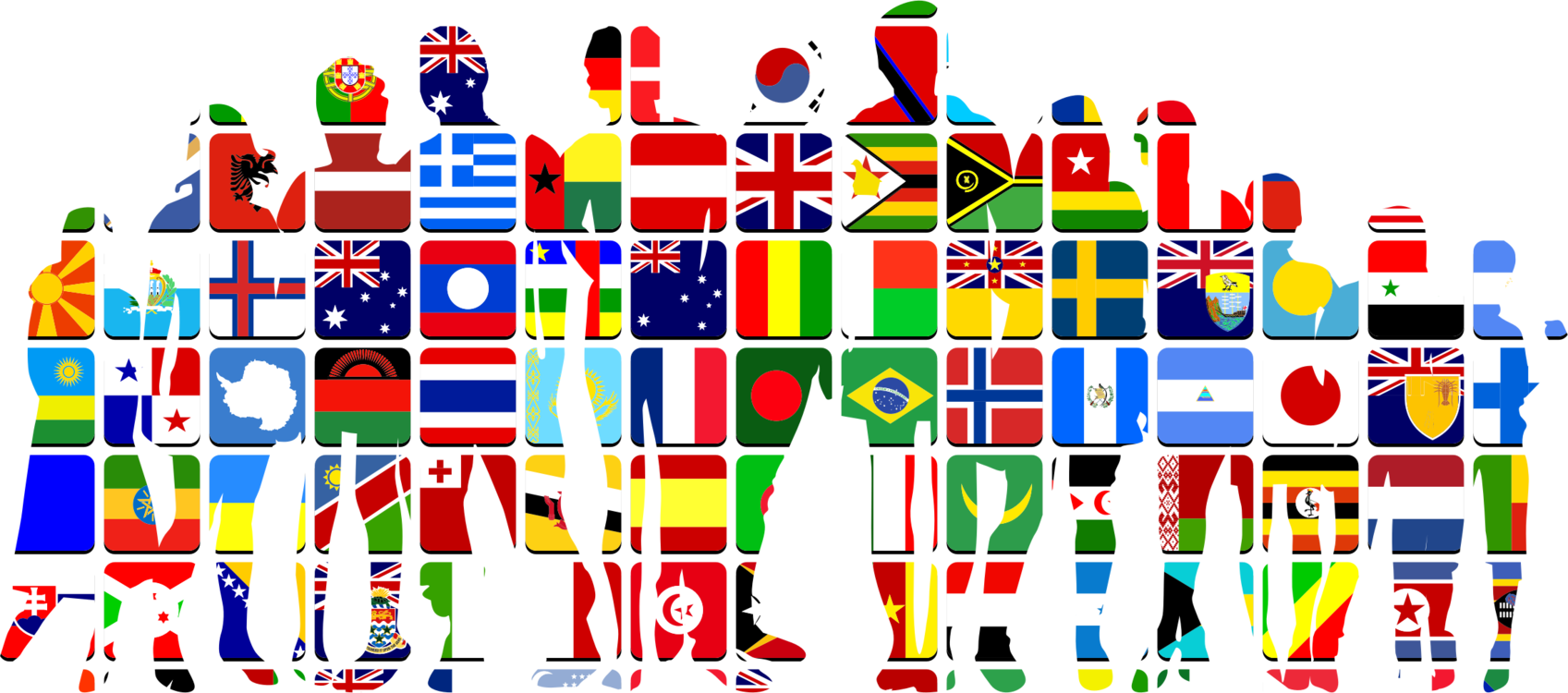
The geographical diversity across our world is no doubt awe-inspiring to a spiritual mind. Diversity is obviously close to the heartbeat of God. We will be compelled to be like Him if we want to be found pleasing to Him. That means appreciating all of humanity’s differences and respecting how others choose to live their lives within the boundaries of international norms and the human rights charter.
It would appear, however, that any attempt to deliberately intersperse different cultures within the same space and/or regions will be problematic. That is called multiculturalism and is not as dear to the Lord’s heart as His love for diversity. They are of course very different phenomena.
Go to, let us go down, AND THERE CONFOUND THEIR LANGUAGE, THAT THEY MAY NOT UNDERSTAND ONE ANOTHER’S SPEECH. So the LORD scattered them abroad from thence upon the face of all the earth: and they left off to build the city. – Genesis 11:7 -8
Culture is defined by the Oxford Dictionary as “the arts and other manifestations of human intellectual achievement regarded collectively.” It is also defined in the same dictionary as “the ideas, customs, and social behaviour of a particular people or society.” In summary, it is the way of doing things within any community whether it be a family, a town, city, nation or continent. Understanding culture is critical in understanding any community’s anthropology because it is the bedrock of human learning and socialization within that people group.
It therefore becomes a pipe dream to imagine that true multiculturalism can be achieved without risking absolute bedlam. The several tangents that human learning will undergo under that type of utopian experiment will lead to a cacophony of social noise that originates from disparate values and legal codes. That was so decreed at Babel. It cannot be reversed in any dispensation no matter how hard we try. Besides, it strains the boundaries of reason and logic to expect multiple cultures and patently dissimilar value systems to subsist in the same space without conflict. The diversity within our world and its peoples is a beautiful phenomenon for society but for it to succeed and be maintained, the ideas, values and governance rules i.e. the way of doing things must be uniformly regulated. This will engender assimilation and integration, promote public trust, guarantee social cohesion and maintain national identities. To put it in the metaphorical context of the scriptures, the language of the people must be the same for the multitudes to come together.
Now when this was noised abroad, THE MULTITUDE CAME TOGETHER, AND WERE CONFOUNDED, BECAUSE THAT EVERY MAN HEARD THEM SPEAK IN HIS OWN LANGUAGE. – Acts 2:6
Life may sometimes appear to be meaningless but its true purpose or the divine intent behind it can only properly be found in the contributions each life can and should provide to our common humanity. To understand the whole, we must first understand the individual part. To do that, you have to look beyond monolithic traditional forms and systems of worship. The biggest problem that organized religion faces in the twenty first century is holding on to the coat tails of ancient dogma and doctrines. Such doctrines have clearly become anachronistic in the light of new discoveries in the earth and from continuing revelation from heaven. The Lord is always doing new things.
Remember ye not the former things, neither consider the things of old. BEHOLD, I WILL DO A NEW THING; NOW IT SHALL SPRING FORTH; SHALL YE NOT KNOW IT? I will even make a way in the wilderness, and rivers in the desert. – Isaiah 43:18 -19
Now let’s all partake in the hidden wisdom found amongst the perfect or mature and share your thoughts through your comments.
Agape….
Alpha 1


No comment