
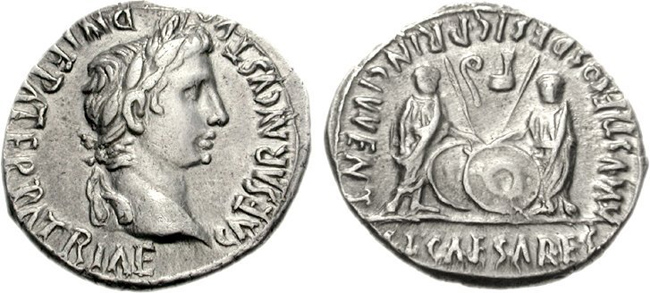
On the next day, when he departed, HE TOOK OUT TWO DENARII, gave them to the innkeeper, and said to him, ‘Take care of him; and whatever more you spend, when I come again, I will repay you.’ – Luke 10:35 (NKJV)
Our Lord Jesus Christ had a unique habit which he deployed every now and again as he was teaching the deep truths of the kingdom of God to the multitudes. Whenever he desired to share what he described as the children’s bread, he would switch to the use of parables to communicate the import of his message so that it would take only the discernment of the studious and the help of the Holy Spirit to unravel. His intent in doing so was to shut out those whose hearts were not properly situated in righteousness so that they could not partake of the mysteries of the kingdom.
And the disciples came, and said unto him, Why speakest thou unto them in parables? He answered and said unto them, BECAUSE IT IS GIVEN UNTO YOU TO KNOW THE MYSTERIES OF THE KINGDOM OF HEAVEN, BUT TO THEM IT IS NOT GIVEN. For whosoever hath, to him shall be given, and he shall have more abundance: but whosoever hath not, from him shall be taken away even that he hath. – Matthew 13:10 -12
Afterall, every believer knows by now that the things of God’s spirit can only be spiritually discerned. The natural man flounders and falters even when spiritual verities are unfolding around him.
But the natural man receiveth not the things of the Spirit of God: for they are foolishness unto him: neither can he know them, BECAUSE THEY ARE SPIRITUALLY DISCERNED. – 1Corinthians 2:14
Our Lord, Jesus spoke in parables when he was sharing the story of the good Samaritan as seen in our opening verse of scripture. To fully understand the context of the story of the good Samaritan, it will help to understand exactly what two denari were worth at the time the story was recounted. One denarius at the time was the equivalent of a labourer’s daily wage.
Now when he had agreed with the laborers for a denarius a day, he sent them into his vineyard. – Matthew 20:2 (NKJV)
After the conquest of Greek Macedonia by the Romans, they adopted and copied the use of silver coins from the Greek monetary system. Classical historians refer to the type of denarii that was in use back then as the “heavy denari” because of its great value. Unfortunately, the Romans began a slow and steady debasement of the value of the denarius by reducing the amount of silver content within it. As with most things today, devaluation and inflation have eroded the value of money so badly that even the minimum wage of some of the most supposedly advanced countries of the world cannot take the recipients home anymore. As predicted by the bible, money has started to fail again. Money on its own can and does fail from time to time but charity never fails. Our kind seeds of charity sown into the lives of those who need our help will always bring new life, blossom and bear fruit. They live on to bless us even up to our children’s children. The bible is unambiguous about the fact that charity never fails.
AND WHEN MONEY FAILED IN THE LAND OF EGYPT, and in the land of Canaan, all the Egyptians came unto Joseph, and said, Give us bread: for why should we die in thy presence? FOR THE MONEY FAILETH. – Genesis 47:15
CHARITY NEVER FAILETH: but whether there be prophecies, they shall fail; whether there be tongues, they shall cease; whether there be knowledge, it shall vanish away – 1Corinthians 13:8
After providing for inflation and capital depreciation, it has been computed by bible experts, that one denarius in bible times was the equivalent of seventy United States dollars today. Two denarii today therefore was approximately the value of one hundred and forty dollars. This revelation puts a whole new meaning and context to the story. A whole new meaning indeed! The point made by the Jesus in the parable is very clear. Charity is not meant to be flippant or casual. It is meant to have value and produce a measure of completion to the purpose to which it is dispensed. It is instructive that the Samaritan was not done when he gave his two denarii. No! He told the innkeeper to keep his tab open so that if there was any need for more, he would fulfill it on his return journey.
We were not told that the Samaritan was particularly rich in the text. We can however surmise that he could afford what he gave without jeopardizing his own way of life. Compare him to the sanctimonious priest who the bible tells us actually saw the wounded traveler or to the religious Levite who actually looked at him squarely. They both crossed over to the other side of the road. At the very least, we cannot accuse both men of being compassionate.
And by chance there came down a certain priest that way: and when he saw him, he passed by on the other side. And likewise a Levite, when he was at the place, came and looked on him, and passed by on the other side. – Luke 10:31 – 32
Compassion is at the heart of the gospel of Jesus Christ. This is why He shared this story. Regardless of their stripes, you can only know the true children of God by this quality. They love God and they love humanity. You do not have to pay two denarii in order to validate your kindred with Christ but you do have to have the habit and ability to show compassion. Compassion like everything else in the Kingdom of God is acceptable according to what a man has. Not according to what he has not. Charity is not meant to cause you personal discomfort. It is however definitely meant to alleviate the sufferings of others.
For if there be first a willing mind, it is accepted ACCORDING TO THAT A MAN HATH, AND NOT ACCORDING TO THAT HE HATH NOT. For I mean NOT THAT OTHER MEN BE EASED, AND YE BURDENED: – 2Corinthians 8:12 -13
One can also deduce from the parable that the best people are not necessarily those with high falutin titles before their names. We see that in the conduct of the priest and the Levite. A choice therefore stands before us. Would you rather receive the reward of men that is prompted by what you do for vain shew even when it really does not solve a problem at hand? Or would you rather receive the reward of Jehovah Himself when you practice your charity in secret and ensure that it achieves the purpose to which it is dispensed? That choice is ours as individuals to make. It is a take heed moment.
Take heed that ye do not your alms before men, to be seen of them: otherwise ye have no reward of your Father which is in heaven. Therefore when thou doest thine alms, do not sound a trumpet before thee, as the hypocrites do in the synagogues and in the streets, that they may have glory of men. VERILY I SAY UNTO YOU, THEY HAVE THEIR REWARD. But when thou doest alms, let not thy left hand know what thy right hand doeth: THAT THINE ALMS MAY BE IN SECRET: AND THY FATHER WHICH SEETH IN SECRET HIMSELF SHALL REWARD THEE OPENLY. – Matthew 6:1 -4
How do you compare with the generosity of the good Samaritan in your personal acts of charity? This question is especially relevant when you know you can easily afford it.
Now let’s all partake in the hidden wisdom found amongst the perfect or mature and share your thoughts through your comments.
Agape….
Alpha 1





No comment